Nas blockchains tradicionais, as atualizações da rede dependem geralmente do consenso dos programadores principais ou dos mineradores, com uma participação dos utilizadores bastante limitada. A Decred revoluciona a governança da blockchain ao integrar um sistema de votação diretamente no protocolo, permitindo que os titulares de tokens intervenham ativamente na definição de regras e na alocação de fundos.
Sob a perspetiva dos ativos digitais e da infraestrutura, a Decred representa mais do que uma criptomoeda — é um modelo de blockchain que unifica consenso, segurança e governança numa única estrutura, proporcionando um caminho claro para a autonomia on-chain.
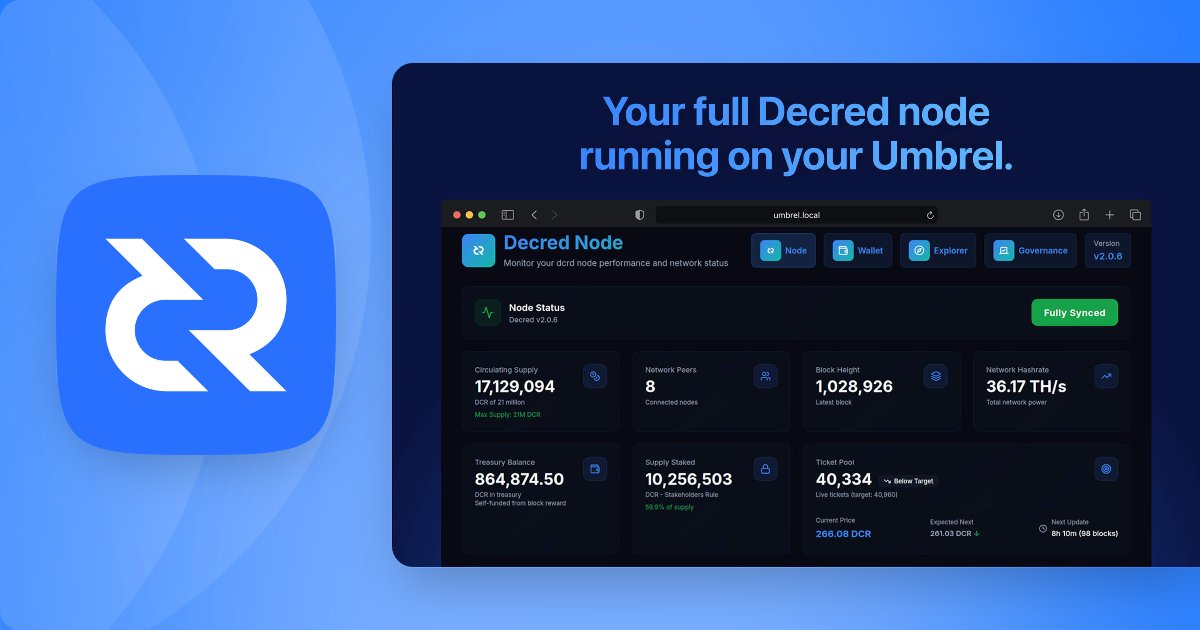
Fonte: decred.org
Mecanismo de consenso híbrido da Decred: colaboração entre PoW e PoS
O mecanismo de consenso híbrido é um dos pilares da arquitetura da Decred, integrando Proof of Work (PoW) e Proof of Stake (PoS) num só sistema. Esta estrutura dupla foi desenhada para evitar a concentração de poder que pode surgir com a dependência de um único mecanismo.
Neste modelo, o PoW trata da produção dos blocos, enquanto o PoS assegura a validação e a votação dos mesmos. Cada mecanismo tem uma função própria, mas ambos colaboram para alcançar o consenso da rede. A “separação entre produção e validação” garante que a segurança da rede não depende de um só interveniente.
Diferenciando-se das redes PoW tradicionais, na Decred os mineradores produzem blocos, mas estes só são confirmados pelos votantes PoS. Este processo confere aos titulares de tokens uma influência concreta sobre as operações da rede e constitui a base da governança descentralizada. Para uma análise detalhada, consultar “Como funciona o mecanismo de consenso híbrido”.
Utilidade do token DCR: incentivos, segurança e governança integrados
O DCR é o ativo central da rede Decred, sustentando toda a operação do sistema.
Ao nível dos incentivos, o DCR recompensa mineradores e stakers pela sua participação, garantindo a operação contínua da rede. Para segurança, os titulares podem fazer staking de DCR e obter direitos de voto, ligando diretamente incentivos económicos à segurança da rede.
O DCR é igualmente um instrumento de governança. Os titulares de tokens votam em atualizações do protocolo e na alocação de fundos, tornando o DCR não apenas um meio de troca, mas uma ferramenta de decisão. Para aprofundar o modelo económico, consultar “Como funciona o mecanismo de staking de DCR” e “Como são alocadas as recompensas de bloco”.
Governança da Decred: sistema de propostas e processo de votação
A governança da Decred assenta na votação on-chain, com decisões estruturadas através do sistema de propostas Politeia.
Qualquer participante pode apresentar propostas, incluindo atualizações de protocolo, melhorias de funcionalidades ou iniciativas de financiamento. Após debate público, os utilizadores com direitos de voto participam na votação.
Pontos-chave deste processo:
O poder de governança é descentralizado — nem a equipa de desenvolvimento nem os mineradores detêm controlo exclusivo. As decisões são tomadas coletivamente pelos titulares de tokens.
A votação serve tanto para operações diárias como para alterações às regras do protocolo, permitindo que o rumo da Decred seja moldado pelo consenso da comunidade. Para uma análise aprofundada, consultar “Como os mecanismos de votação on-chain impactam as atualizações de protocolo”.
Tesouraria da Decred: funcionamento da gestão comunitária de fundos
A Decred dispõe de um sistema de Tesouraria on-chain para apoiar o desenvolvimento sustentável do projeto.
Uma percentagem de cada recompensa de bloco é alocada à Tesouraria. Estes fundos não são geridos por nenhuma entidade centralizada; a sua utilização é decidida por votação comunitária.
Principais utilizações dos fundos da Tesouraria:
- Desenvolvimento e manutenção do protocolo
- Construção de infraestrutura
- Apoio à comunidade e ao ecossistema
Este modelo permite à Decred manter-se independente de financiamento externo. Para saber mais, consultar “O que é o modelo de Tesouraria na blockchain” e “Como são alocados os fundos DAO”.
Modelo económico da Decred: recompensas de bloco, staking e estrutura de inflação
O modelo económico da Decred estrutura-se em torno das recompensas de bloco, com uma distribuição clara para equilibrar os incentivos.
Distribuição das recompensas de bloco:
| Destinatário |
Percentagem |
Função |
| Mineradores PoW |
1% |
Fornecem poder de hash e produzem blocos |
| Votantes PoS |
89% |
Validam blocos e participam na governança |
| Tesouraria |
10% |
Apoiam o ecossistema e o desenvolvimento |
A maioria dos incentivos é atribuída aos votantes PoS, reforçando o papel central dos titulares de tokens no sistema.
A emissão de DCR ocorre gradualmente através das recompensas de bloco e diminui ao longo do tempo, estabelecendo um modelo de “inflação decrescente”.
Este sistema integra segurança, governança e financiamento numa só estrutura económica, formando a base da sustentabilidade a longo prazo da Decred.
Como a Decred se diferencia de outras blockchains: comparação dos modelos de governança e consenso
Em relação às blockchains tradicionais, a Decred destaca-se em dois aspetos fundamentais: a estrutura de consenso e o modelo de governança. Estas diferenças não são apenas técnicas — redefinem também a distribuição de poder e influenciam a evolução da rede.
No consenso, a Decred utiliza um modelo híbrido PoW e PoS, enquanto o Bitcoin depende exclusivamente de PoW. Na Decred, a produção e confirmação de blocos são asseguradas por participantes distintos: mineradores produzem blocos e stakers votam sobre a sua validade. Assim, a segurança da rede depende não só do poder de hash, mas também da participação ativa dos titulares de tokens, criando uma estrutura de segurança em vários níveis.
Num modelo PoW puro, a segurança depende da distribuição do poder de hash — se este se centralizar, a rede enfrenta riscos sistémicos elevados. Ao adicionar a votação PoS, o consenso híbrido da Decred obriga um atacante a controlar simultaneamente o poder de hash e os tokens, aumentando substancialmente o custo de um ataque.
Na governança, a Decred incorpora propostas e votação diretamente no protocolo, permitindo aos titulares de tokens participar em todas as decisões importantes. A governança on-chain permite alterações de regras e alocação de fundos por via de votação pública. Muitas blockchains, por oposição, dependem de coordenação off-chain — como reuniões de programadores ou consenso comunitário — sem um mecanismo de execução integrado.
Isto aproxima a Decred de um modelo “autónomo ao nível do protocolo”, com lógica de governança semelhante a uma DAO embutida na blockchain. A padronização dos processos de governança reduz o risco de forks e aumenta a transparência.
| Dimensão |
Decred |
Bitcoin |
| Mecanismo de consenso |
Consenso híbrido PoW + PoS |
PoW único |
| Confirmação de bloco |
Produção por minerador + votação PoS |
Produção por minerador |
| Modelo de governança |
Propostas on-chain + votação |
Coordenação off-chain |
| Caminho de atualização |
Votação comunitária |
Coordenação de programadores e mineradores |
| Mecanismo de financiamento |
Tesouraria incorporada |
Sem pool de fundos incorporado |
A diferença fundamental não reside numa inovação técnica isolada, mas na integração de consenso, segurança e governança num único sistema. Isto garante processos claros para a tomada de decisões e execução.
Pontos fortes, limitações e equívocos comuns sobre a Decred
O design da Decred oferece vantagens estruturais relevantes, mas também aumenta a complexidade e apresenta desafios.
Entre os pontos fortes, o mecanismo de consenso híbrido — com mineradores e stakers — reforça a resistência a ataques, pois um atacante teria de controlar tanto o poder de hash como uma quantidade significativa de tokens, elevando o patamar de segurança. A governança on-chain permite à comunidade influenciar diretamente a evolução do protocolo, reduzindo a dependência dos programadores principais e promovendo a descentralização.
O mecanismo da Tesouraria garante financiamento contínuo, pelo que o desenvolvimento e o crescimento do ecossistema não dependem de fontes externas. Este “modelo de financiamento endógeno” favorece a sustentabilidade a longo prazo e reduz o risco de interrupção do projeto.
Contudo, existem limitações. O modelo híbrido aumenta a complexidade do sistema, dificultando a compreensão e participação do utilizador comum. A votação PoS depende da distribuição dos tokens — se o poder de voto se concentrar, a equidade da governança pode ser afetada.
O staking normalmente implica bloquear ativos, o que reduz a liquidez e pode desmotivar a participação. Embora a governança on-chain aumente a transparência, uma baixa participação pode permitir que um pequeno grupo domine as decisões.
Um equívoco frequente é assumir que “consenso híbrido” equivale automaticamente a maior segurança. Na realidade, a segurança depende do mecanismo, da estrutura de participação, dos incentivos e da distribuição dos tokens.
Outro mal-entendido é pensar que a governança on-chain resolve por completo a tomada de decisões em blockchain. Na prática, os mecanismos de governança exigem melhorias contínuas — como aumentar a participação nas votações e evitar a dominação por grupos restritos — desafios que permanecem em aberto.
Resumo
Ao integrar consenso híbrido, governança on-chain e uma Tesouraria comunitária, a Decred segue um caminho de desenvolvimento distinto das blockchains tradicionais. A principal inovação consiste em unificar “operação da rede” e “tomada de decisão da rede” ao nível do protocolo, em oposição a modelos de consenso único ou de governança off-chain.
Este design transforma a Decred numa organização com capacidades de autogovernança, para além de um sistema de transações. Apesar da complexidade e das barreiras à participação, a abordagem à governança e aos incentivos serve de referência para a autonomia on-chain.
Perguntas Frequentes
- O que distingue a Decred do Bitcoin?
A Decred utiliza um consenso híbrido PoW + PoS e suporta governança on-chain, enquanto o Bitcoin depende exclusivamente de PoW, com a maior parte da governança a decorrer off-chain.
- Porque é que a Decred opta por um modelo de consenso híbrido?
A combinação de PoW e PoS reduz os riscos de um mecanismo único e reforça a segurança e descentralização da rede.
- Fazer staking de DCR implica bloquear tokens?
Sim. Para participar na votação, o DCR deve ser bloqueado como Ticket e permanece ilíquido durante um período definido.
- Quem gere os fundos da Tesouraria?
Os fundos da Tesouraria são geridos coletivamente pelos utilizadores com direitos de voto, através de propostas e votação.
- A Decred é uma DAO?
A governança da Decred tem caraterísticas semelhantes a uma DAO, mas é implementada por um sistema de votação embutido no protocolo.