Stacks وLightning صُمما لتوسيع قدرات Bitcoin، ولذلك كثيرًا ما تتم مناقشتهما معًا. ومع ذلك، يعالج كل منهما مشكلة مختلفة تمامًا؛ فهدف Lightning الأساسي هو رفع كفاءة مدفوعات BTC، بينما يركز Stacks على إضافة قدرات العقد الذكي وطبقة التطبيقات إلى Bitcoin. رغم أن كليهما جزء من منظومة Bitcoin Layer الأكبر، إلا أن بنيتهما الداخلية ومنطقهما التشغيلي واستخداماتهما العملية تختلف بشكل كبير.
مع تطور منظومة Bitcoin إلى مجالات تتعدى نقل القيمة البسيط مثل التمويل اللامركزي (DeFi)، والرموز غير القابلة للاستبدال (NFTs)، والتطبيقات على السلسلة، ظهرت حلول توسعة متنوعة في السوق. تستهدف بعض المشاريع توسعة المدفوعات وزيادة السعة، بينما تهدف أخرى لجعل BTC أكثر قابلية للبرمجة. Lightning وStacks يجسدان هذين النهجين ويبرزان كأبرز شبكات التوسعة في منظومة Bitcoin اليوم.
ما هو الدور الأساسي لمنصة Stacks؟
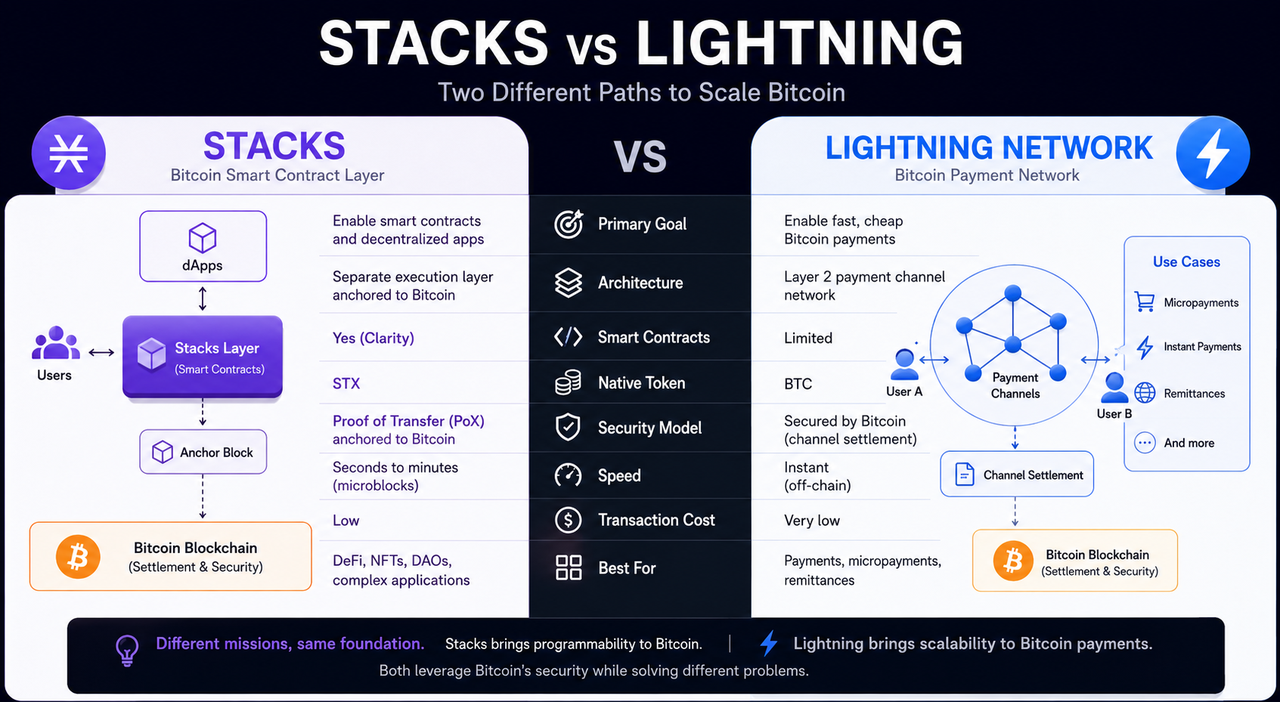
Stacks عبارة عن طبقة العقد الذكي (أو طبقة العقود الذكية عند الإشارة للجمع، حسب السياق). مبنية على Bitcoin، وتهدف إلى إضفاء البرمجة على Bitcoin دون أي تعديل في بروتوكول BTC نفسه.
يعتمد Stacks على بنية مزدوجة تجمع بين طبقة تنفيذ مستقلة وطبقة تسوية تابعة لـBitcoin، مما يتيح للمطورين نشر تطبيقات DApp (التطبيقات اللامركزية)، وبروتوكولات التمويل اللامركزي (DeFi)، وتطبيقات NFT، وأنظمة الحوكمة على السلسلة. آلية الإجماع الأساسية لديه، PoX (إثبات النقل)، تضمن تشغيل الشبكة عبر تدوير القيمة بين BTC وSTX.
على عكس مفاهيم "التوسعة" التقليدية، يركز Stacks أساسًا على "تمكين BTC من دعم التطبيقات". لذا، يُنظر إليه كعنصر أساسي في طبقة تطبيقات Bitcoin، أو منظومة Bitcoin Layer الأوسع.
ما هو الدور الأساسي لشبكة Lightning؟
Lightning Network هي شبكة توسعة مدفوعات مبنية على Bitcoin، وهدفها الرئيسي زيادة كفاءة BTC في المدفوعات الصغيرة.
نظرًا لبطء تأكيدات السلسلة الرئيسية لـBitcoin وتقلب رسوم العمليات، تنشئ Lightning قنوات دفع خارج السلسلة، مما يسمح للمستخدمين بتحويل الأموال بشكل فوري دون الحاجة لتفاعلات متكررة مع السلسلة الرئيسية.
عمليًا، لا تُسجل معظم معاملات Lightning فورًا على السلسلة الرئيسية لـBTC، بل تتم تسويتها جماعيًا عند إغلاق قنوات الدفع. هذا الأسلوب يقلل الرسوم بشكل كبير ويعزز سرعة المعاملات.
Lightning مثالية للمدفوعات اليومية، والتحويلات عبر الحدود، والمعاملات الصغيرة وعالية التكرار، وليست مصممة للعقود الذكية المعقدة أو التطبيقات على السلسلة.
ما الفرق التقني بين Stacks وLightning؟
يكمن الفارق الأبرز في البنية التقنية لكل منهما.
يمتاز Stacks بـطبقة تنفيذ مستقلة لتشغيل العقد الذكي ومنطق التطبيقات، مع تثبيت الحالة في السلسلة الرئيسية لـBitcoin عبر كتل الربط. تستخدم الشبكة رمز STX وتستند إلى آلية إجماع PoX في تأمين الشبكة.
أما Lightning، فتعتمد على إطار عمل قنوات الدفع. ينشئ المستخدمون قنوات خارج السلسلة فيما بينهم، وتُجرى غالبية المعاملات داخل هذه القنوات، مع تفاعل مع السلسلة الرئيسية فقط عند فتح أو إغلاق القنوات.
بعبارات مبسطة، يعمل Stacks كـ"منصة تطبيقات قائمة على BTC"، بينما تعتبر Lightning "شبكة مدفوعات قائمة على BTC".
كيف تختلف حالات استخدام كل منصة؟
يظهر التباين بوضوح في تركيز كل منصة على نوع التطبيقات.
Stacks مثالي للسيناريوهات التي تتطلب دعم العقد الذكي مثل DeFi على Bitcoin، وNFTs، وDAOs، وبروتوكولات الأصول الرقمية، وأنظمة الحوكمة على السلسلة، حيث تحتاج هذه التطبيقات إلى بيئة تنفيذ قابلة للبرمجة، وهي نقطة قوة Stacks.
بينما تتركز قوة Lightning في المدفوعات؛ فالرسوم المنخفضة والتسوية الفورية تجعلها مناسبة لمدفوعات المقاهي، والتحويلات عبر الحدود، والمدفوعات الصغيرة، وشبكات المدفوعات عالية التكرار.
إذا اعتبرنا منظومة Bitcoin كبنية تحتية للإنترنت، فإن Lightning تمثل "قناة مدفوعات"، بينما يمثل Stacks "نظام تشغيل لطبقة التطبيقات".
كيف يرث كل من Stacks وLightning أمان Bitcoin؟
يعتمد كلاهما على أمان السلسلة الرئيسية لـBitcoin، لكن كل منهما يفعل ذلك بطريقة مختلفة.
يربط Stacks حالات الكتل الرئيسية بالسلسلة الرئيسية لـBTC ويقيم صلة اقتصادية مع Bitcoin من خلال آلية إجماع PoX، ما يمنح تأكيداته النهائية أمان شبكة BTC.
أما Lightning، فتستخدم السلسلة الرئيسية لـBitcoin كطبقة تسوية نهائية لقنوات الدفع، حيث تُسجل الأرصدة النهائية عند إغلاق القناة مباشرة على السلسلة الرئيسية لـBTC.
رغم أن كلاهما يحافظ على ارتباط وثيق بـBitcoin، إلا أن Stacks يركز على "أمان Bitcoin + تنفيذ التطبيقات"، في حين تركز Lightning على "أمان Bitcoin + توسعة المدفوعات".
ما الفرق بين STX وBTC؟
Lightning مبنية بالكامل على BTC؛ حيث يتم الدفع والتسوية باستخدام BTC مباشرة، ولا يوجد رمز أصلي مستقل.
أما Stacks، فلديه أصل أصلي هو STX، STX هو الأصل الأصلي، ويُستخدم لدفع رسوم Gas، والمشاركة في إجماع PoX، والتخزين (Staking). هناك أيضًا دورة قيمة بين STX وBTC، حيث يمكن للمخزنين (Stackers) الحصول على مكافآت BTC.
بالتالي، Lightning هي في الأساس "حل توسعة مدفوعات BTC"، بينما ينشئ Stacks نظامًا اقتصاديًا مستقلاً لطبقة التطبيقات.
لماذا تتم مناقشتهما معًا؟
Stacks وLightning كلاهما جزء أساسي من منظومة Bitcoin Layer، وغالبًا ما يُنظر إليهما كحلول توسعة لـBitcoin.
ومع ذلك، يختلف تركيز كل منهما؛ Lightning تستهدف تحسين كفاءة مدفوعات BTC، بينما يعالج Stacks غياب وظيفة العقد الذكي في BTC.
ومع تطور DeFi على Bitcoin واتساع منظومة تطبيقات Bitcoin، يزداد اهتمام السوق بقدرة Bitcoin على دعم تطبيقات مشابهة لـEthereum، وهو ما يزيد الاهتمام بـStacks. في مجال المدفوعات، تظل Lightning الحل النموذجي لتوسعة BTC.
على المدى البعيد، لا يمثل وجودهما منافسة بالضرورة؛ فكل واحد يمثل طبقة وظيفية مختلفة ضمن منظومة BTC.
جدول مقارنة بين Stacks وLightning
| بُعد المقارنة |
Stacks |
Lightning |
| الهدف الأساسي |
العقد الذكي وطبقة التطبيقات |
توسعة مدفوعات Bitcoin |
| الاستخدام الرئيسي |
DeFi، NFT، dApp |
المدفوعات الصغيرة والسريعة |
| البنية التقنية |
طبقة تنفيذ + طبقة تسوية BTC |
شبكة قنوات الدفع |
| دعم العقد الذكي |
مدعوم |
محدود |
| الأصل الأصلي |
STX |
BTC |
| مصدر الأمان |
مرتبط بالسلسلة الرئيسية لـBTC |
تتم تسويته على السلسلة الرئيسية لـBTC |
| خصائص العمليات |
تفاعل برمجي مع التطبيقات |
مدفوعات سريعة ومنخفضة التكلفة |
أي الحلين أفضل لمستقبل Bitcoin؟
تتطور منظومة Bitcoin من كونها مخزنًا للقيمة فقط لتشمل المدفوعات، والتمويل، والتطبيقات على السلسلة، لذا قد تتعايش حلول توسعة متعددة على المدى الطويل.
Lightning مثالية للسيناريوهات التي تركز على كفاءة المدفوعات، بينما يناسب Stacks الحالات التي تتطلب البرمجة ودعم التطبيقات. يمثل كل منهما مسارًا تقنيًا مختلفًا: "توسعة المدفوعات" مقابل "توسعة التطبيقات".
ومع نضوج منظومة Bitcoin Layer، قد تتطور بنية BTC إلى هيكل متعدد الطبقات، مع دور محوري لكل من Stacks وLightning.
الملخص
Stacks وLightning هما حلان أساسيان لتوسعة Bitcoin، لكنهما يستهدفان تحديات مختلفة. Lightning تركز على رفع كفاءة مدفوعات BTC، بينما يهدف Stacks إلى إدخال العقد الذكي وإمكانات طبقة التطبيقات إلى Bitcoin.
تقنيًا، توصف Lightning بأنها شبكة مدفوعات خارج السلسلة، بينما يخدم Stacks كبنية تحتية لطبقة التطبيقات على Bitcoin. مع توسع منظومات DeFi وOrdinals (رموز Ordinals أو الرموز الترتيبية حسب السياق) والأصول الأصلية على Bitcoin، يدفع كل حل المنظومة في اتجاه جديد.
الأسئلة الشائعة
هل يعتبر كل من Stacks وLightning حلول Layer2؟
يتم تصنيف كليهما ضمن منظومة Bitcoin Layer، رغم أن بنيتهما التقنية لا تتطابق تمامًا مع تعريف Layer2 (الطبقة الثانية) التقليدي.
هل تدعم Lightning العقد الذكي؟
Lightning مبنية لتوسعة المدفوعات وتدعم برمجة محدودة فقط، ما يجعلها غير مناسبة لتطبيقات العقد الذكي المعقدة.
لماذا يحتاج Stacks إلى رمز STX؟
يُستخدم STX لدفع رسوم Gas، والمشاركة في إجماع PoX، وتنفيذ التخزين.
أي الحلين أفضل للتمويل اللامركزي (DeFi)؟
Stacks هو الأنسب لحالات استخدام DeFi وNFT وdApp التي تتطلب دعم العقد الذكي.
هل ستتنافس Lightning وStacks؟
يوسع كل منهما Bitcoin في اتجاه مختلف – أحدهما للمدفوعات والآخر للتطبيقات – لذا في معظم الحالات، يكمل كل منهما الآخر بدلاً من المنافسة.