Crypto Trading 101: What Is a Market Sell Order? Understanding Its Meaning and Risks

Beginner
Quick Reads
Last Updated 2026-03-28 14:40:57
Reading Time: 1m
This article gives new investors a clear overview of market sell orders, examines the pros and cons of using them in cryptocurrency trading, and shares actionable strategies to minimize slippage and prevent losses.

What Is a Market Sell?
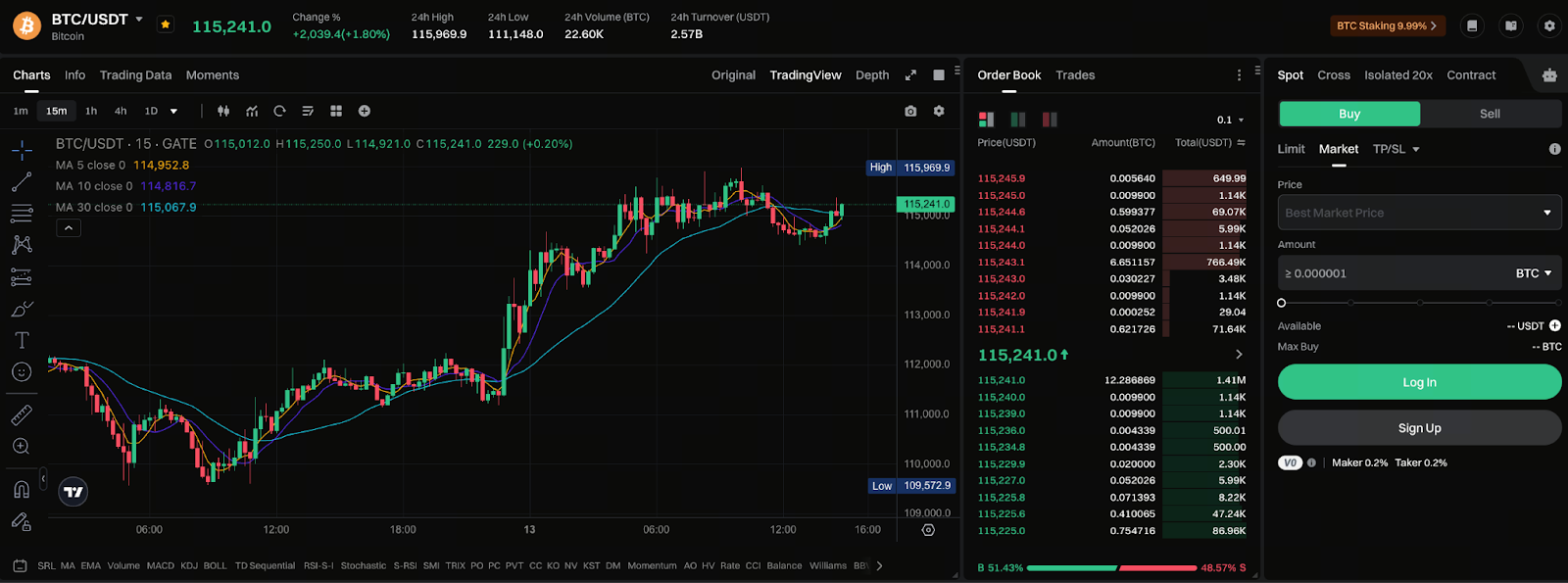

Image: https://www.gate.com/trade/BTC_USDT

In both cryptocurrency and traditional financial markets, a “market sell” refers to selling assets at the best available price for immediate execution. When you place a market sell order, the system automatically matches your order with the highest current bid from buyers. For example, if you want to sell 1 Bitcoin immediately and the best bid is $105,000, the platform executes your sale at that price immediately.

Difference Between Market Sell and Limit Sell

Market orders prioritize speed, while limit orders focus on price.

  • Market sell: Executed instantly, though the price may be lower than expected.
  • Limit sell: You set your target price, and the order is executed only if the market reaches that level.

Market sell orders are common among short-term traders or those seeking to cut losses quickly in volatile conditions. Patient investors seeking better prices typically prefer limit orders.

Market Order Advantages: Speed Matters Most

The primary advantage of a market sell order is instant execution. When prices are moving fast, market orders let you complete trades immediately, helping you avoid greater losses if the market continues to decline. In highly volatile crypto markets like Bitcoin or Ethereum, having your trade filled instantly can be more important than achieving the perfect price.

Market Order Risks: Slippage and Price Uncertainty

Market orders carry slippage risk. Slippage is the difference between the price you see when placing the order and the actual execution price. If trading volume is low or volatility is high, the system may match your order against several buy orders in sequence, causing part of your assets to sell at lower prices, which can result in losses. For example, you intend to sell BTC at $105,000, but if market depth is insufficient, your average sale price might be only $104,800.

When to Use Market Sell in Crypto Markets

Market sell orders are best suited for the following scenarios:

  • Stop-loss events: Sell immediately when prices fall below key support levels to minimize losses.
  • Liquidity needs: When you need to liquidate assets immediately.
  • Short-term or high-frequency trading: Time-sensitive strategies often use market orders.

If you use market orders on low-liquidity tokens, the risk increases because a shallow order book can lead to significant slippage.

Tips for New Investors:

  • Check order book depth: Before placing a market sell, ensure there are enough buy orders to support your trade.
  • Set reasonable stop-loss orders: In volatile markets, plan and set stop-loss orders ahead of time to avoid impulsive decisions.
  • Avoid peak volatility: Slippage risk increases during major announcements or at market open.

Conclusion

Market sell is the most direct method for executing trades, but speed does not ensure stability. Understand the strengths and weaknesses, and use market orders wisely based on current conditions to remain competitive in the fast-moving world of crypto.

Author: Max
Disclaimer
* The information is not intended to be and does not constitute financial advice or any other recommendation of any sort offered or endorsed by Gate.
* This article may not be reproduced, transmitted or copied without referencing Gate. Contravention is an infringement of Copyright Act and may be subject to legal action.

Related Articles

What is Fartcoin? All You Need to Know About FARTCOIN
Intermediate

What is Fartcoin? All You Need to Know About FARTCOIN

Fartcoin (FARTCOIN) is a representative meme coin within the Solana ecosystem based on an AI-driven narrative. Its core concept originated from an experiment aimed at exploring the "boundaries between AI Agents and humor." More than just a digital asset with social attributes, the project deeply couples absurd humor culture with on-chain financial logic by integrating autonomous AI interaction models.
2026-04-04 22:01:19
Gold Price Forecast for the Next Five Years: 2026–2030 Trend Outlook and Investment Implications, Could It Reach $6,000?
Beginner

Gold Price Forecast for the Next Five Years: 2026–2030 Trend Outlook and Investment Implications, Could It Reach $6,000?

Analyze current gold price trends alongside authoritative five-year forecasts, integrating an evaluation of market risks and opportunities. This gives investors insight into the potential trajectory of gold prices and the main drivers expected to shape the market over the next five years.
2026-03-25 18:13:30
Aster vs Hyperliquid: Which Perp DEX Will Prevail?
Beginner

Aster vs Hyperliquid: Which Perp DEX Will Prevail?

Aster and Hyperliquid are the two representative protocols of the "purpose-built L1 path" within the current decentralized perpetual exchange (Perp DEX) sector. As a pioneer in the field, Hyperliquid has built a deep liquidity moat through its highly mature order book architecture and strong community consensus. Conversely, Aster, as a rising challenger, seeks to leapfrog the competition in high-performance trading through more aggressive multi-chain aggregation logic, private transaction modules, and an underlying execution environment optimized for 2026 market demands.
2026-03-24 11:58:33
AI-Native Settlement Layers: How United Stables Is Building the Next Financial Rail
Beginner

AI-Native Settlement Layers: How United Stables Is Building the Next Financial Rail

Stablecoins were originally designed as dollar substitutes within exchanges, primarily used for asset pricing and trade settlement. As on-chain financial ecosystems have matured, their role has expanded beyond simple payments to include collateral assets, cross-chain liquidity mediums, and unified settlement units. In particular, as AI systems and automated agents begin to participate directly in economic activity, demand has risen sharply for programmable value units capable of instant settlement. This shift is pushing stablecoins toward the role of foundational financial infrastructure.
2026-03-25 03:16:17
Aerodrome Tokenomics: How ve(3,3) Powers Base's Most Profitable DEX
Beginner

Aerodrome Tokenomics: How ve(3,3) Powers Base's Most Profitable DEX

AERO is the native token of Aerodrome Finance, a core decentralized exchange and liquidity protocol in the Base ecosystem. It is primarily used for liquidity incentives and ecosystem operations. veAERO is a governance NFT that users receive by locking AERO, representing both voting power and the right to share protocol revenue. Through a dual track structure of AERO as a utility token and veAERO as a governance credential, Aerodrome separates liquidity usage value from long term governance power, allowing participants to act as liquidity providers, governance decision makers, and revenue sharers within the same system.
2026-03-25 06:40:31
The ve(3,3) Flywheel Explained: How AERO Tokenomics Powers Aerodrome’s DeFi Economy
Beginner

The ve(3,3) Flywheel Explained: How AERO Tokenomics Powers Aerodrome’s DeFi Economy

In the competition for DeFi liquidity, high-inflation mining alone is no longer enough to build lasting advantages. Aerodrome applies the ve(3,3) economic model to redesign token emissions, voting mechanisms, and revenue distribution, creating a liquidity flywheel centered on governance and cash flow. This article examines AERO tokenomics, the veAERO locking mechanism, and protocol revenue models to explain how Aerodrome builds a sustainable DeFi economic system.
2026-03-25 06:41:58





