Pendahuluan: Bank dan Crypto—Era Baru
Gambar: https://www.sofi.com/
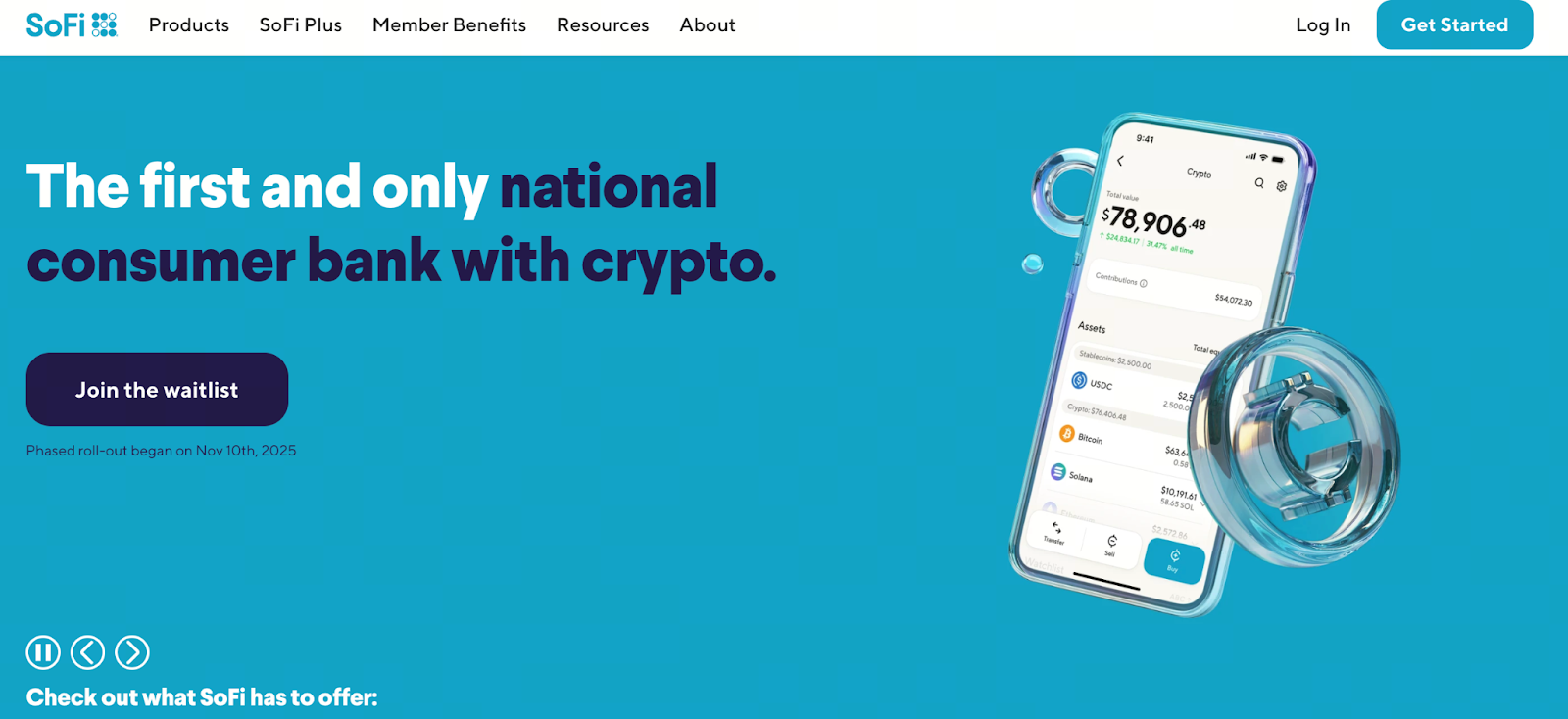
Selama ini, layanan perbankan tradisional berfokus pada tabungan, pinjaman, dan pengelolaan kekayaan, sementara aset kripto berkembang pesat sebagai inovasi utama dalam fintech. SoFi menghadirkan terobosan baru dengan mengintegrasikan layanan perbankan dan perdagangan aset kripto dalam satu platform. Pengguna dapat membeli dan menjual aset kripto seperti BTC, SOL, dan ETH langsung dari rekening bank mereka tanpa perlu menggunakan bursa eksternal. Inovasi ini memungkinkan siapa saja memperoleh aset kripto melalui platform perbankan mereka sendiri. Ini menjadi langkah penting untuk mendorong aset kripto ke dalam arus utama industri keuangan.
Mengapa SoFi Menjadi Pelopor?
Pada 2025, jumlah anggota SoFi telah menembus angka 12,6 juta, memberikan keunggulan signifikan. Sebelumnya, perusahaan ini bermitra dengan Coinbase pada 2019 untuk menyediakan layanan perdagangan aset kripto, namun menghentikan layanan tersebut pada 2023 demi memperoleh lisensi perbankan. Kini, setelah mengantongi lisensi bank nasional, SoFi berada di posisi strategis di antara perbankan tradisional dan fintech. Selain itu, perubahan regulasi terbaru memperjelas partisipasi bank dalam layanan aset kripto. Langkah ini menempatkan SoFi sebagai pelopor model perbankan kripto yang terus berkembang dan berpotensi menjadi standar industri berikutnya.
Gambaran Layanan: Satu Platform Perbankan dan Aset Kripto
SoFi Crypto menghadirkan beberapa fitur utama:
- Pengguna dapat membeli, menjual, dan menyimpan berbagai aset kripto melalui aplikasi perbankan SoFi (dengan dukungan awal untuk BTC, ETH, SOL, dan lainnya).
- Pendanaan diambil langsung dari rekening bank pengguna, sehingga tidak perlu lagi proses setoran, transfer, atau transaksi lintas platform. SoFi memastikan saldo rekening bank dapat digunakan untuk perdagangan.
- Platform ini menerapkan standar keamanan dan kepatuhan setingkat bank, meskipun aset kripto tidak diasuransikan oleh Federal Deposit Insurance Corporation (FDIC) atau Securities Investor Protection Corporation (SIPC).
- Layanan diluncurkan secara bertahap. Pada tahap awal, hanya anggota terpilih yang dapat mengakses, dengan perluasan ke seluruh anggota dalam beberapa minggu ke depan.
Konteks Pasar dan Perkembangan Regulasi
Apa yang mendorong bank-bank tradisional mulai masuk ke perdagangan aset kripto saat ini? Faktor utama meliputi:
- Peningkatan adopsi: SoFi melaporkan sekitar 60% anggota pemilik aset kripto lebih memilih mengelola aset digital melalui bank berlisensi dibandingkan bursa tradisional.
- Perkembangan regulasi: Regulator AS memberikan sinyal pada 2025 bahwa bank dapat menyediakan layanan aset kripto dengan ketentuan yang sesuai.
- Perkembangan industri: Peluncuran SoFi bisa menjadi tolok ukur bagi bank lain untuk mengikuti langkah serupa.
Perbankan dan aset kripto kini semakin terintegrasi dalam kecepatan yang sangat pesat.
Implikasi bagi Pengguna: Menyeimbangkan Peluang dan Risiko
Peluang:
- Untuk pertama kalinya, perbankan tradisional dan perdagangan aset kripto terintegrasi, sehingga pengguna awam dapat menikmati pengalaman yang lebih mudah melalui proses transfer yang lebih efisien, biaya lebih rendah, dan navigasi platform yang lebih sederhana.
- Dukungan lisensi bank meningkatkan kepercayaan, terutama bagi mereka yang sebelumnya khawatir dengan keamanan di bursa.
- Akses aset kripto yang mudah melalui antarmuka perbankan yang sudah akrab dapat menarik pengguna baru dan mempercepat adopsi aset kripto.
Risiko:
- Aset kripto bukan merupakan simpanan dan tidak dilindungi oleh FDIC atau SIPC. SoFi secara tegas memperingatkan bahwa aset kripto dapat kehilangan seluruh nilainya.
- Kemampuan pertukaran, likuiditas, dan aset yang didukung pada tahap awal masih terbatas pada sejumlah aset kripto utama.
- Pengguna yang berdagang langsung dari rekening bank perlu tetap waspada—kemudahan akses tidak berarti menurunkan risiko.
Pengguna harus benar-benar menilai toleransi risiko mereka, karena aset kripto harus dipahami sebagai investasi berisiko tinggi.
Kesimpulan: Era Bank-Crypto Telah Dimulai
Inisiatif SoFi bukan sekadar penggabungan perbankan tradisional dan aset kripto—melainkan dapat menandai transformasi lanskap keuangan secara menyeluruh. Ketika bank mulai menawarkan tabungan, pinjaman, investasi, dan perdagangan aset kripto dalam satu layanan, batas layanan keuangan semakin kabur. Bagi pengguna, ini menjadi pintu masuk yang praktis, namun penting untuk selalu memperhatikan risiko yang ada. Setiap individu yang ingin mengakses aset kripto melalui bank harus memahami aturan, karakteristik aset, dan profil risiko pribadinya terlebih dahulu.
Ke depan, semakin banyak bank diprediksi akan menghadirkan layanan serupa, sehingga dapat mempercepat penerimaan aset kripto di kalangan masyarakat luas.